The number on the scale refuses to move, and you simply don't have enough time for the gym? Work, daily responsibilities, commuting around the city — after a busy day, spending another hour and a half working out is often the last thing you want to do. If you're looking for an effective way to stay in shape and live in Kyiv, EMS can be a convenient training format that fits into your schedule.
20 minutes — and your workout is done. For many clients, 2 EMS workouts per week is a comfortable routine, adding up to just 40 minutes of active training. During this time, you can complete a full-body exercise routine while electrical impulses complement your muscles' work.
But EMS is not a magic button for weight loss. To reduce body fat, your body needs a calorie deficit, while exercise helps increase energy expenditure, maintain muscle mass, and make physical activity a regular part of your lifestyle.
So, how does EMS work for weight loss, what happens to your muscles during a 20-minute session, and can you really achieve results faster than with traditional fitness?
How Does EMS Work for Weight Loss? The Mechanics of Fat Burning and Muscle Activation
During a conventional workout, your brain sends nerve signals to your muscles, causing them to contract. You perform a squat — your legs and glutes are working. You hold a plank — your core muscles are actively engaged.
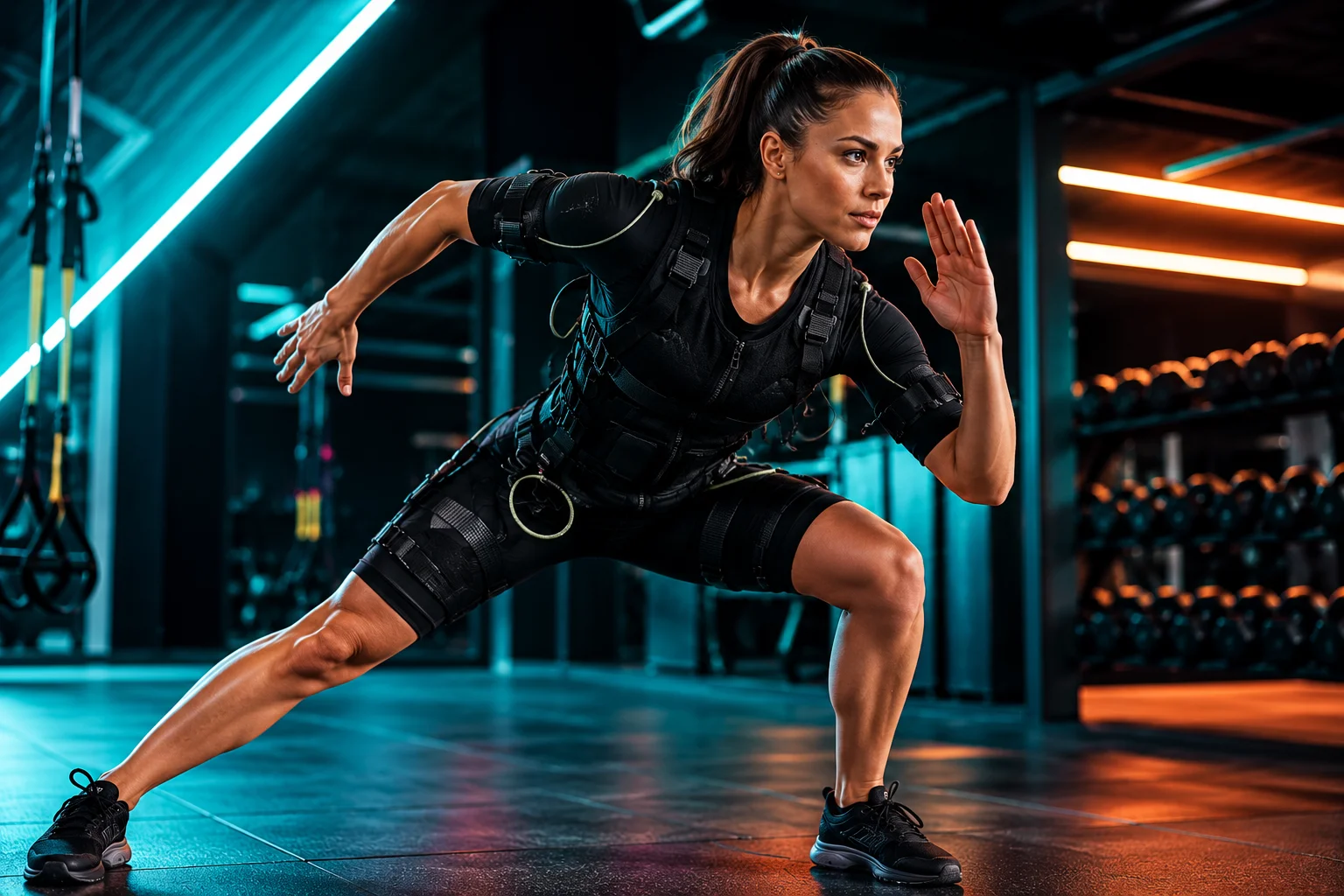
During EMS, external electrical stimulation is added to this natural process. Electrical impulses are delivered through electrodes, triggering additional muscle contractions. You still perform the exercises yourself, while EMS helps stimulate several large muscle groups at the same time.
The sensation is unusual at first. It may begin as a gentle tingling, followed by rhythmic vibration and a strong, dense muscle contraction. As your trainer gradually increases the intensity, you can literally feel your thighs, glutes, abs, and back engaging.
That is why even a simple exercise during an EMS session can feel much more intense than you might expect.
Electrical Stimulation for Weight Loss: What Happens During an EMS Miha Workout?
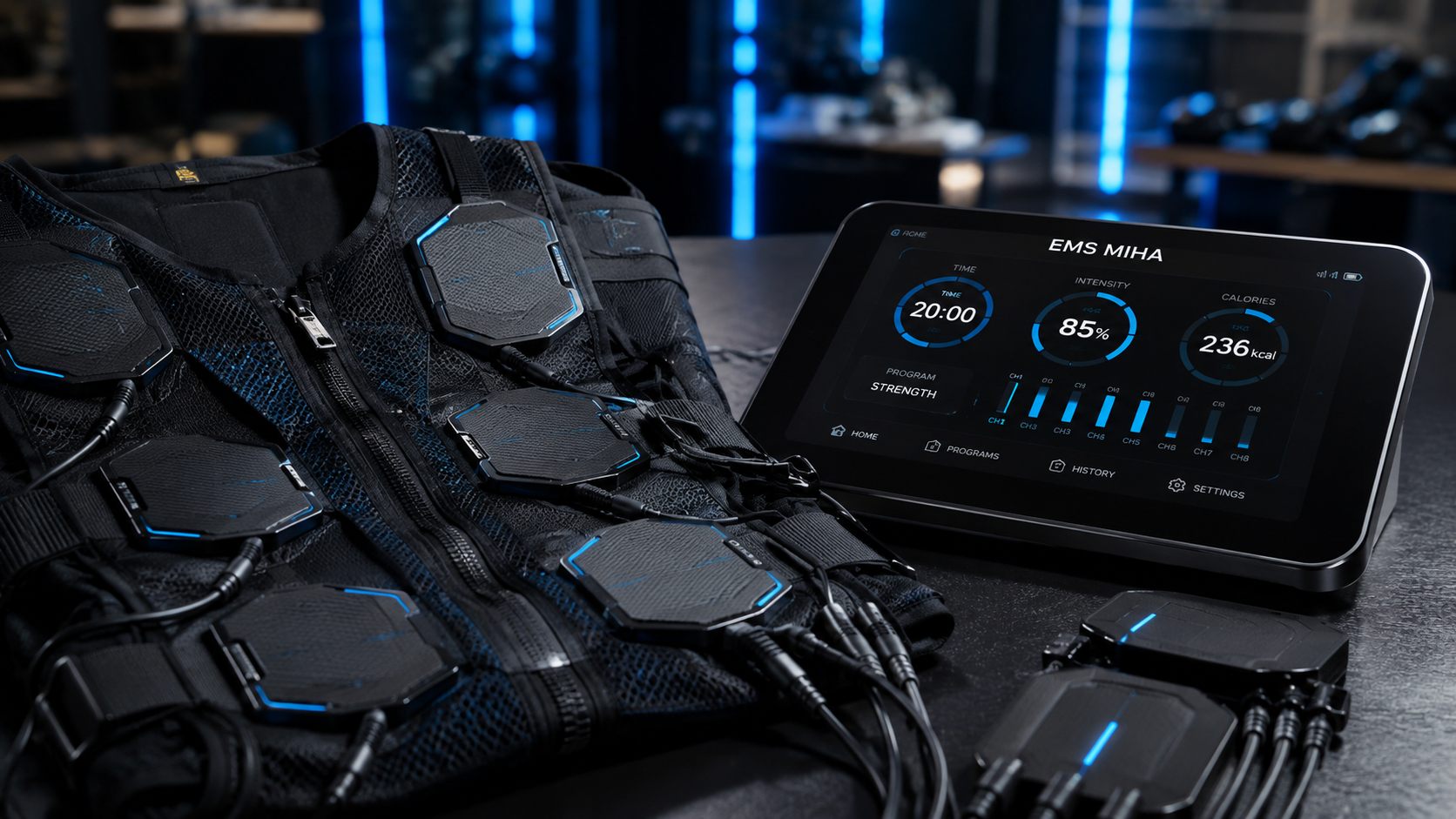
The workout starts with preparation. You put on a special base layer suit, after which your trainer connects the EMS equipment and adjusts the system to your individual needs.
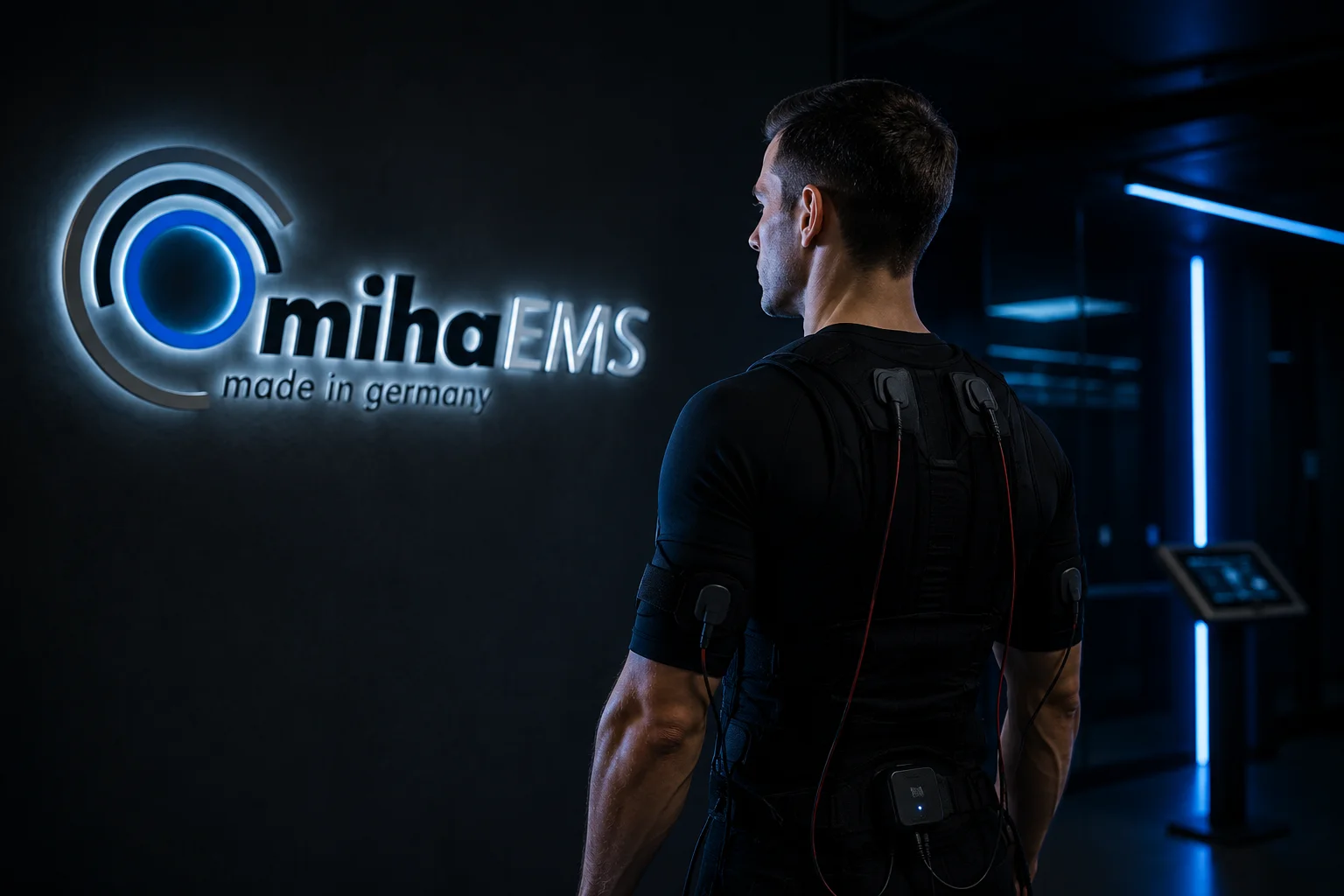
At EMS Miha, we use professional Miha Bodytec equipment. Your trainer gradually adjusts the intensity of the electrical impulses for different areas of the body — legs, glutes, abs, back, and arms.
At the beginning of the session, we spend around 2–3 minutes on individual setup. This is an important part of the workout: one muscle group may comfortably handle a higher intensity, while another may require a gentler setting.
Then the actual workout begins. Depending on the program, you may perform:
squats and half-squats;
lunges;
abdominal exercises;
planks;
static exercises;
glute-focused movements;
back and arm exercises.
Your trainer stays with you throughout the session, checking your technique, correcting your posture, and adjusting the intensity of the impulses.
EMS Fitness and Fat Burning: What Happens to Body Fat?
There are two processes to separate here. EMS helps your body expend energy during the workout and creates a significant stimulus for your muscles. But to reduce body fat, your body needs to receive less energy than it uses.
That is a calorie deficit.
As a general estimate, 20 minutes of EMS may result in around 150–300 kcal of energy expenditure, although the actual figure depends on your body weight, workout intensity, and individual characteristics.
For effective EMS fitness, we recommend combining:
2 workouts per week;
a moderate calorie deficit;
sufficient protein intake;
daily physical activity;
quality sleep;
proper recovery.
EMS does not replace a balanced diet, but it can make regular physical activity much easier to maintain, even with a very busy schedule.
The Afterburn Effect (EPOC): Why Your Body Keeps Using Energy After a Workout
After intense physical activity, your body needs time to return to its normal state. It restores breathing and heart rate, replenishes energy stores, and begins repairing muscle tissue.
This process is associated with EPOC — Excess Post-exercise Oxygen Consumption, often referred to as the Afterburn effect.
Here's a simple example. You complete a 20-minute workout in the morning and then head to work. A few hours later, you're sitting at your desk, but your body is still recovering from the physical load.
That's why you may experience pleasant fatigue or mild muscle soreness the following day. Your muscles have been challenged, and your body continues using resources to recover.
EPOC and EMS: What You Need to Know About the Afterburn Effect
The EPOC effect is real, but it shouldn't be viewed as the secret to weight loss. It would be inaccurate to say that after every EMS workout, your body automatically burns fat at a high rate for 24–48 hours.
The amount of additional energy expenditure after exercise depends on the intensity of the workout and the individual's characteristics.
For long-term results, consistency matters much more. Two workouts per week, daily activity, and mindful nutrition will do more for your progress than occasional high-intensity sessions.
EMS vs. Traditional Fitness for Weight Loss: Which Is More Effective?
EMS and traditional fitness both have their advantages. But if your biggest challenge is a lack of time, the short EMS format may be much easier to maintain consistently.
Two 20-minute workouts per week add up to just 40 minutes of active training.
Parameter | EMS Workout | Traditional Fitness |
|---|---|---|
Duration | 20 minutes | 45–90 minutes |
Frequency | 2 times per week | Often 3–4 times |
Calorie expenditure | Approximately 150–300 kcal per 20 minutes | Depends on the workout |
Joint impact | No mandatory running or jumping | Depends on the program |
Muscle activation | Simultaneous stimulation of several muscle groups | Depends on the exercises |
Lymphatic drainage effect | Rhythmic muscle contractions | Depends on the type of activity |
Time commitment | Minimal | Requires more time |
For someone with a busy schedule, the biggest advantage of EMS is often not "magical" fat burning, but the ability to train consistently without spending several hours a week at the gym.
EMS and Joint-Friendly Training: Workouts Without Excessive Impact
If you don't enjoy running or jumping, EMS can be a more comfortable alternative for staying physically active.
During a session, you can perform controlled exercises without a large number of high-impact movements. This allows you to work your muscles actively without necessarily having to run or jump.
Your trainer selects exercises according to your fitness level and monitors your technique throughout the session.
EMS, Lymphatic Drainage, and Skin Firmness: What Changes Along With Your Figure?
The results of training are not limited to the number on the scale. Clients often notice that their body feels more toned and their muscles feel firmer.
Rhythmic muscle contractions during EMS stimulate circulation and the movement of tissue fluid. That is why a workout can create a pleasant lymphatic drainage effect and a feeling of lightness in the body.
Combined with proper nutrition and regular physical activity, gradually reducing body fat and strengthening muscles can help improve body contours. Your glutes become firmer, while your overall silhouette looks more toned.
Myths About EMS for Weight Loss It's Time to Stop Believing
Myth #1: "EMS Is a Workout for Lazy People"
No. The suit won't do your squats for you.
During the workout, you perform exercises, hold positions, engage your muscles, and work together with your trainer. Electrical impulses complement physical exercise, but they do not replace it.
So after 20 minutes, you can absolutely feel like you've had a real workout.
Myth #2: "EMS Is Dangerous for Your Body"
A professional EMS workout involves individually adjusted intensity and supervision from a trained professional.
At EMS Miha, stimulation levels are gradually adjusted for each muscle group. We focus on comfortable, controlled intensity rather than the "the stronger, the better" approach.
Before your workout, your trainer asks about your health and any relevant limitations. You should inform your trainer in advance about any medical contraindications.
How to Get 100% Results from EMS Miha: Your Trainers' Checklist
An EMS session takes just 20 minutes, but your results depend on what you do throughout the entire week.
1. Maintain a Calorie Deficit
For weight loss, your body needs to receive less energy than it expends. A calorie deficit is the foundation of reducing body fat.
2. Train 2 Times a Week
For many clients, the optimal schedule is 2 EMS workouts per week, with enough time between sessions for recovery.
3. Drink Enough Water
Maintain proper hydration throughout the day. It is especially important to pay attention to your fluid intake on days when you exercise.
4. Give Your Muscles Time to Recover
You don't need to train every day. Quality sleep and sufficient recovery help your body adapt to the physical load.
5. Track Your Progress Holistically
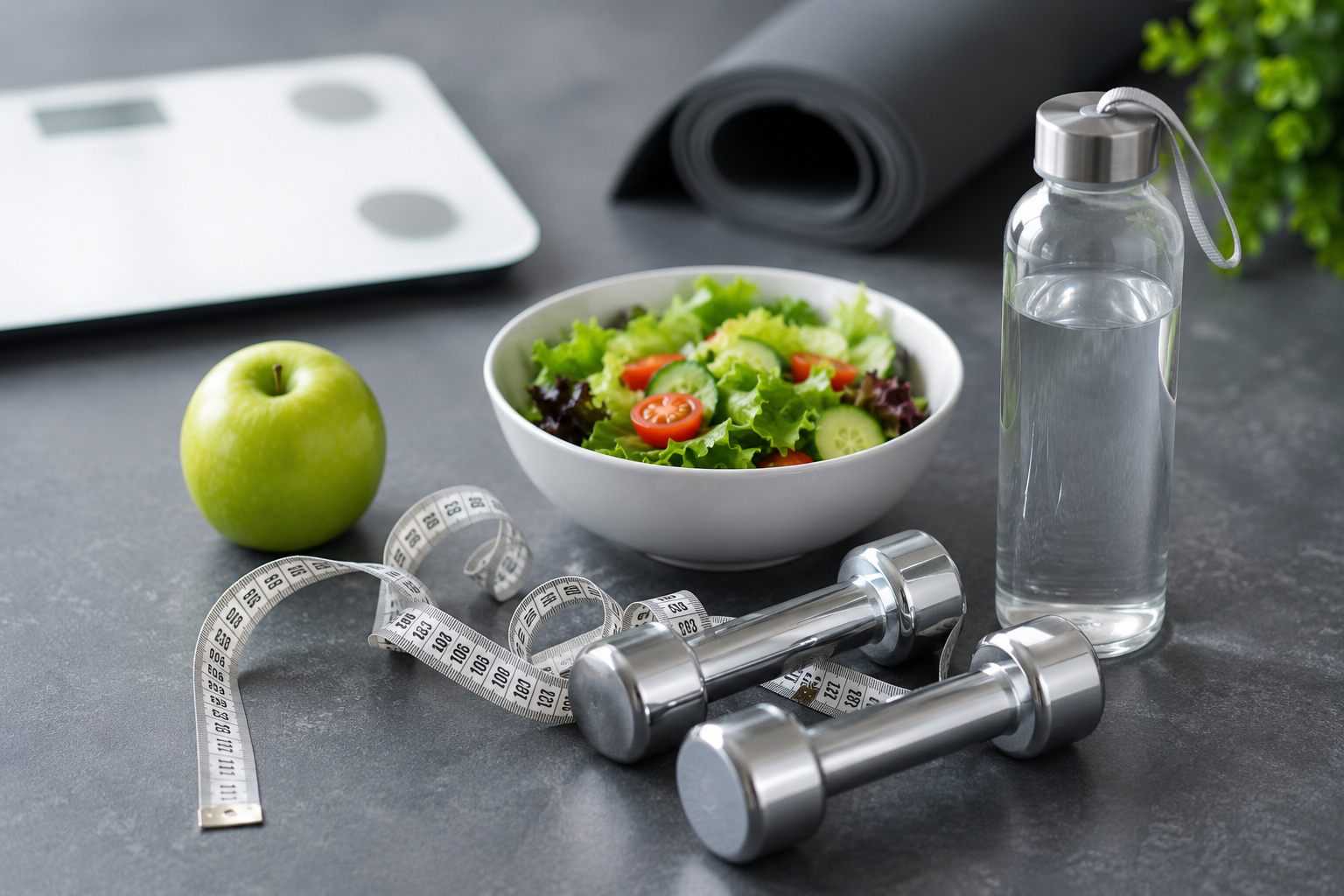
Your weight is not the only indicator of progress. Measure your body circumference, take progress photos, and pay attention to how your clothes fit. Sometimes your measurements change before the number on the scale does.
EMS Miha in Kyiv: Book Your Trial Workout
If you've been wanting to lose weight, tone your body, or bring regular exercise back into your schedule but don't want to spend several hours a week working out, try EMS training.
At EMS Miha, you train individually with a professional trainer. First, you put on a special suit, then we adjust the impulses for different muscle groups and move on to the exercises.
20 minutes, 2 times a week — that's just 40 minutes of active training.
No long gym sessions. No need to build your entire schedule around fitness.
If you're looking for EMS workouts in Kyiv, book a trial session at EMS Miha and experience for yourself how short, intensive workouts with professional Miha Bodytec equipment work.